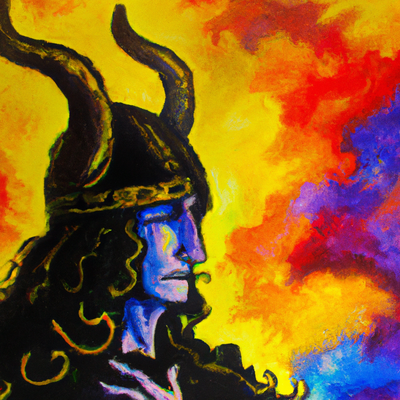
Heimdall and his exemplary vigilance
Nordic mythology is full of fascinating characters, but few have managed to capture the imagination of history and legend lovers as well as Heimdall.…
Nordic mythology, rich in epic tales and legendary characters, represents an essential part of the cultural heritage of the Scandinavian peoples. These myths, elaborated during the Viking era, describe a complex universe populated by gods, giants and mythical beings, reflecting the beliefs and values of these ancient societies. The reach of this mythology extends far beyond Nordic borders, influencing literature, the arts and even contemporary popular culture. Famous works such as the novels of J.R.R. Tolkien and the films of the Marvel universe bear witness to its lasting impact.
According to Norse mythology, the world emerged from original chaos. At the heart of this cosmogony is the giant Ymir, whose body gave birth to the various elements of the universe. His blood formed the oceans, his bones the mountains, and his skull the sky. This cosmic vision is completed by the creation of Asgard, the realm of the Aesir, a faction of Norse gods, and other worlds inhabited by diverse entities such as humans, giants and elves. Each world is interconnected by Yggdrasil, the cosmic tree, symbolizing life and the interdependence of the different planes of existence.
Ragnarok is the dramatic climax of Norse mythology, marking the end of one cycle and the beginning of a new one. This cataclysmic battle results in the death of many gods, including Odin, Thor and Loki, and the destruction of the known universe. However, Ragnarok is not just an end; it's also a renewal. According to myth, the world will rise from its ashes, and a new generation of gods and men will emerge, symbolizing the cyclicality of life and nature.
Norse mythology had a profound influence on Viking culture, permeating their religious beliefs, social practices and art. Vikings interpreted myths as guides to life, ritual and celebration. Artistic representations of gods, monsters and mythological symbols were common in Viking craftsmanship, reflecting a deep integration of these stories into their daily lives.
In short, Norse mythology offers a fascinating glimpse into a universe rich in symbols, wisdom and heroic tales. It continues to influence modern culture, testifying to its relevance and timeless appeal. The gods and heroes of these myths, and their extraordinary adventures, never cease to capture the imagination, making Norse mythology a subject of perpetual study and fascination.
Nordic mythology is full of fascinating characters, but few have managed to capture the imagination of history and legend lovers as well as Heimdall.…
Nordic mythology is a fascinating subject that has captured the imagination of many people throughout the ages. It's full of fascinating stories abou…
Norse mythology is rich in deities involved in the daily life of the Vikings. Among these, Njörd, the god of the sea and the winds, occupied a promin…
In many cultures, spirits or supernatural entities play an important role in people's daily lives. In Iceland, these beings include the dísir, or fem…
Norse mythology is rich in deities, each with its own role and importance in the Nordic pantheon. Among these deities, Freyr is often considered one …
The Vikings are renowned for their maritime expeditions and conquests, which marked an important period in European history and beyond. Among them, t…

In Norse mythology, Freyr, also known as Frey, is the god of prosperity, fertility and peace. He is often depicted as a handsome, elegant man, holdin…
The Vikings were known not only for their unrivalled bravery and relentless conquests, but also for their cultural and artistic wealth. Among the man…